






In-cell, On-cell, Out-cell: three LCD screen structures that appeared from 2019, with very different qualities. Our team explains it all so you buy right.
Three cellular structures
The ITO touch film sits under the glass substrate: LCD, touch and 3D Touch are merged. Just 2 layers, closest to the original screen. Very popular since 2019 for its quality.
The ITO touch film sits on the upper glass, reducing the air and touch layers. Mid-range quality, rarely produced as demand is lower.
All layers are arranged separately: thicker, but good quality retained. Economical and sold in volume — around 70% of the market.
The comparison at a glance
| Criterion | In-cell | On-cell | Out-cell |
|---|---|---|---|
| Layers | 2 (= original) | 3 | 4 |
| Thickness | thinnest | medium | thickest |
| Image quality | best | decent | decent |
| Price | highest | medium | cheapest |
| Market | popular | rare | ~70% |
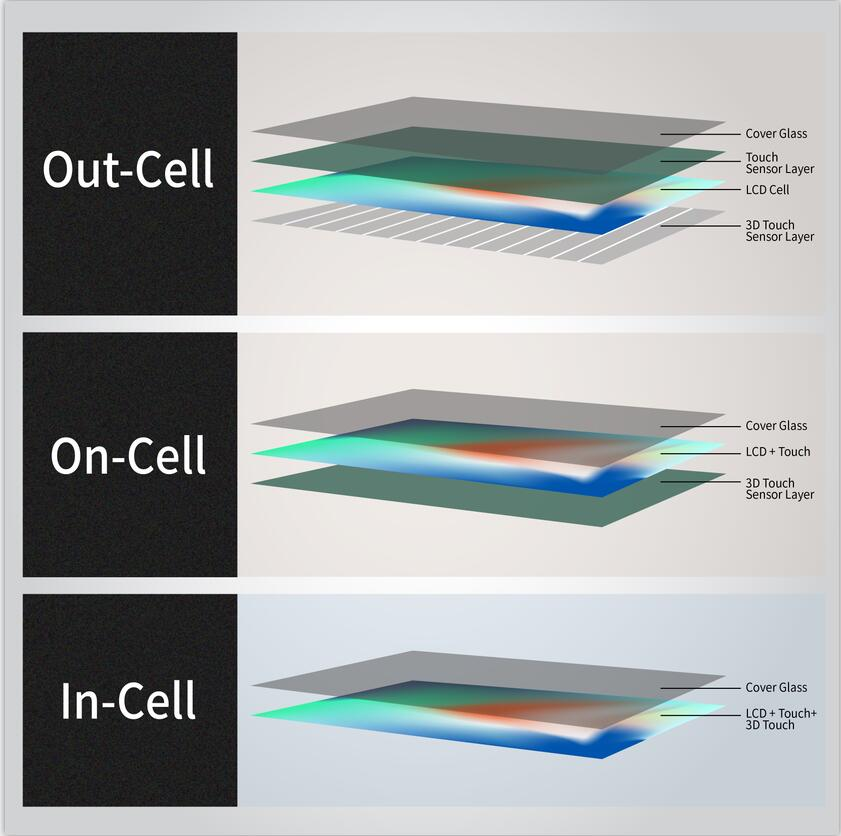
In-cell embeds the touch sensor within the pixel: with only 2 layers, it is the closest to the original and therefore the best quality. Out-cell, thicker and more affordable, remains a solid volume choice.
👉 Read also: OEM, OLED or LCD and Soft OLED vs Hard OLED.