






Repairer's guide
OEM, OLED or LCD? To choose the right iPhone screens, you first need to understand what sets these technologies apart. Our team ran a real-world comparison.
📱
OLED or LCD: two technologies
LCD screen
4 layers: glass, touch, display and backlight. The screen always lights up entirely: shallower blacks and higher power use.
OLED screen
3 layers: glass, touch and a self-emissive display. No backlight: each pixel produces its own light → perfect blacks and battery savings.
🔬
Our real-world comparison
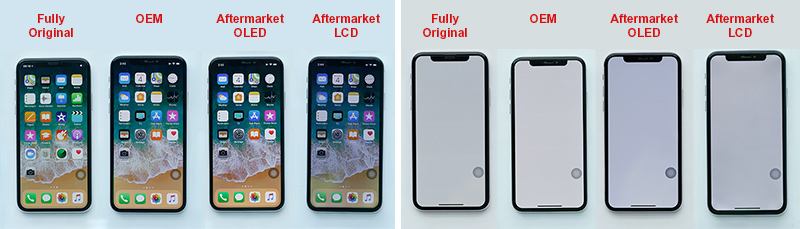
- Colour: no obvious difference between original and OEM OLED. LCD renders darker, less sharp colours.
- Thickness: the original is the thinnest, followed by OEM. LCD is noticeably thicker than OLED.
- IC module: very close between OLED and OEM; LCD clearly differs (different technology).
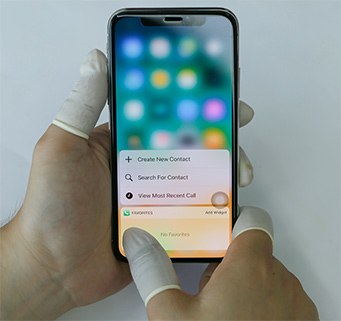
- Touch: 3D Touch works on all three. When swiping, OLED and OEM are equally responsive; LCD is slightly less sensitive.
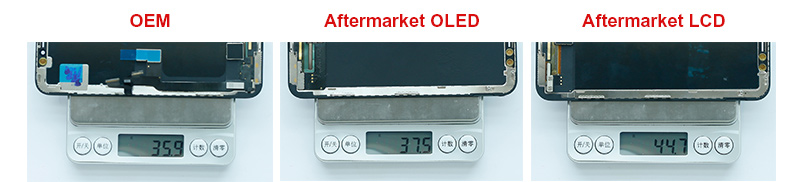
⚖️ Weight measured after installation
35.9 g
OEM
37.5 g
OLED
44.7 g
LCD
✅ In conclusion
OLED is thinner (3 layers vs 4 for LCD) and delivers sharper light and deeper blacks. For an end customer the differences are subtle; for professionals like us, these details make all the difference in a repair.